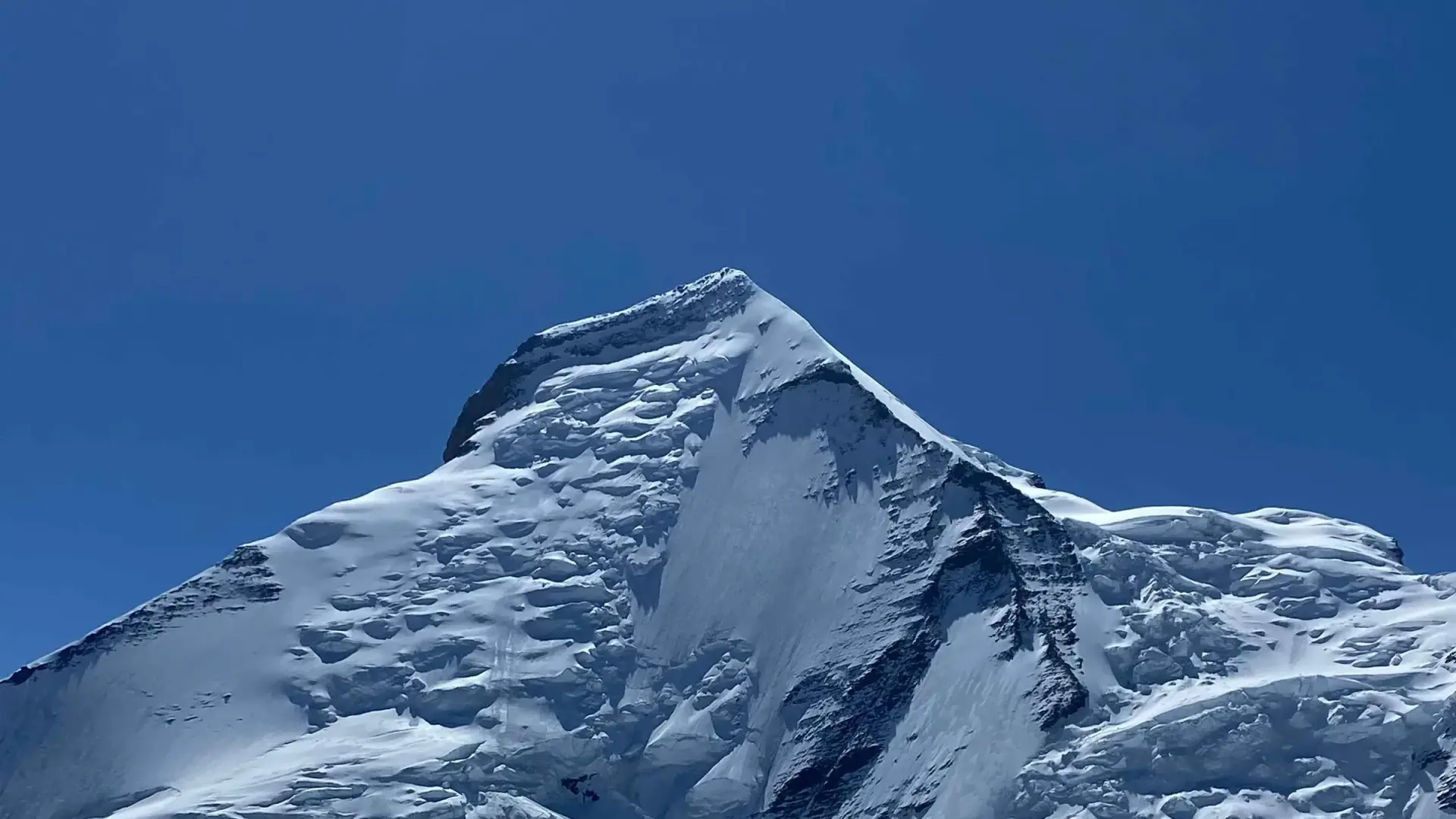
By Rahul Thakur (Ricky Mountaineer) | August 2026 | Ladakh, Indian Himalayas
Mountains have always been more than just summits for me. Every climb teaches something new about patience, preparation, endurance and, most importantly, respect for the mountain.
In August 2026, I successfully summited Mt Nun (7,135m), one of the most remarkable and challenging peaks in the Indian Himalayas.
Located in the Suru Valley of Ladakh, Mount Nun is a serious high-altitude mountaineering objective that demands physical endurance, technical climbing skills and careful decision-making.
This expedition was particularly special because of the approach we chose. Our team completed a fast ascent from Tangol village, reaching the summit on 29 August 2026 at approximately 9:30 AM and returning to Tangol on 30 August.
In this article, I want to share my first-hand experience of climbing Mt Nun, the challenges we encountered, my observations of the mountain and what aspiring climbers should understand before planning their own expedition.
If you are considering climbing Mt Nun in 2027, I hope this account helps you understand the mountain a little better.
1. Discovering Mount Nun – 7,135m
Mount Nun stands at 7,135 metres above sea level and is the highest peak of the Nun-Kun massif in Ladakh, India.
Situated above the beautiful Suru Valley in the Kargil district, the mountain is surrounded by glaciers, dramatic ridgelines and some of the most impressive landscapes of the western Himalayas.
Unlike many trekking destinations, Mt Nun is a serious mountaineering objective. Its altitude, glacier systems, steep snow slopes and technical climbing sections require appropriate experience and preparation.
For climbers looking to progress beyond 6,000-metre Himalayan peaks, Mt Nun offers a demanding opportunity to experience the challenges of climbing above 7,000 metres.
The mountain requires much more than physical fitness. Climbers must understand technical equipment, glacier travel, fixed-rope systems, acclimatization and the importance of making responsible decisions in high-altitude conditions.
2. My Mt Nun Expedition – August 2026
Our Mt Nun expedition took place in August 2026.
Rather than following a conventional longer climbing schedule, we planned a fast ascent from Tangol village.
Our team began the journey from Tangol on 26 August 2026. Over the following days, we progressed through the approach and climbing sections towards the higher mountain.
During our ascent, we moved from Base Camp towards Camp 2, bypassing Camp 1 as part of our particular climbing strategy.
The upper mountain involved challenging snow, ice, rock and mixed climbing terrain. As we gained altitude, the physical and technical demands increased considerably.
On 29 August 2026, at approximately 9:30 AM, I successfully reached the summit of Mt Nun at 7,135 metres.
After the summit, we began our descent and returned to Tangol village on 30 August 2026.
Our expedition timeline
- 26 August 2026: Started from Tangol village.
- 27–28 August 2026: Continued the approach and high-altitude climbing progression.
- 29 August 2026: Successfully summited Mt Nun at approximately 9:30 AM.
- 30 August 2026: Completed the descent and returned to Tangol village.
It was a demanding and memorable experience that gave me valuable first-hand knowledge of the mountain.
Every expedition has its own conditions. Our fast ascent was based on our team’s experience, preparation and the conditions we encountered. It should not be considered a standard itinerary or a recommended approach for every climber.
3. What Makes Mt Nun a Challenging Mountain?
Climbing Mount Nun is very different from trekking to a high-altitude destination. Several factors make this mountain a serious mountaineering objective.
Extreme altitude
At 7,135 metres, the body operates in an environment with significantly reduced oxygen availability.
Physical endurance, acclimatization and careful altitude management are essential.
Glacier travel
The approach and climbing route involve glaciated terrain. Climbers should be familiar with glacier movement and the appropriate use of mountaineering equipment.
Snow and ice climbing
The mountain involves technical snow and ice sections where crampon techniques, ice axe skills and controlled movement are important.
Fixed-rope sections
Depending on route conditions, climbers may encounter fixed-rope sections requiring the use of harnesses, jumars and appropriate safety systems.
Changing mountain weather
Weather conditions can change quickly at high elevations. Wind, snowfall and poor visibility can affect climbing schedules and summit opportunities.
Physical and mental endurance
A summit attempt above 7,000 metres requires sustained effort, careful pacing and the ability to make responsible decisions under difficult conditions.
For these reasons, I strongly recommend that climbers approach Mt Nun with proper technical training and previous high-altitude experience.
4. Understanding the Mt Nun Climbing Route
The Mt Nun expedition generally begins from Tangol village in the Suru Valley.
From Tangol, climbers approach the mountain’s Base Camp before beginning the main climbing phase.
The mountain route involves multiple high-altitude camps.
Base Camp
Base Camp is the main operational centre of the expedition.
It is where climbers prepare their equipment, complete technical training, monitor weather conditions and organise movements towards the higher camps.
Camp 1
Camp 1 is the first major high-altitude camp on the climbing route.
The movement towards this camp involves glacier travel and snow-covered mountain terrain.
Camp 2
Camp 2 is established higher on the mountain and forms an important stage of the climbing programme.
As climbers gain altitude, the physical and technical demands increase.
Summit Camp
Summit Camp is the final high-altitude camp before the summit attempt.
Climbers prepare for the final ascent while carefully considering weather, route conditions and their physical condition.
The Summit – 7,135m
The summit of Mt Nun is the ultimate objective of the expedition.
Reaching the top requires technical ability, endurance, preparation and sound decision-making.
Camp positions and route conditions can vary between expeditions depending on snow conditions, weather and the climbing strategy.
5. Best Time to Climb Mt Nun
The main climbing season for Mount Nun is during the summer and early autumn months.
July, August and September are commonly considered for high-altitude climbing programmes in Ladakh.
July: July offers a summer climbing window, although snow conditions and weather need to be carefully assessed.
August: August can provide suitable climbing opportunities depending on the condition of the upper mountain and weather patterns.
September: September offers a late-season climbing opportunity, with colder temperatures and changing weather conditions.
The actual summit window depends on weather, snowfall, wind conditions and the safety of the climbing route.
My recommendation is to plan your expedition with enough flexibility rather than focusing only on a fixed summit date.
6. Who Should Attempt Mt Nun?
Mt Nun is not a beginner trekking objective.
It is intended for mountaineers who have developed the physical fitness and technical skills required for high-altitude climbing.
Before considering Mt Nun, climbers should ideally have:
- Previous experience on high-altitude Himalayan peaks.
- Experience climbing above 6,000 metres.
- Knowledge of crampon and ice axe techniques.
- Experience with glacier travel.
- Familiarity with fixed-rope climbing.
- Jumar and rope-management skills.
- Strong cardiovascular endurance.
- The ability to operate in cold and remote mountain environments.
Every climber should honestly assess their experience before joining a 7,000-metre expedition.
A guided expedition does not replace the technical skills and personal preparation required from each participant.
7. How to Prepare for Mt Nun
Preparation for a mountain like Mt Nun should begin several months before the expedition.
Physical fitness, technical training and previous climbing experience all play an important role.
Physical training
I recommend focusing on:
- Long-distance hiking with a backpack.
- Uphill endurance training.
- Cardiovascular conditioning.
- Strength training for legs and core.
- Stair climbing.
- Training with mountaineering boots and personal equipment.
Technical training
Climbers should be confident with:
- Crampon techniques.
- Ice axe use.
- Glacier travel.
- Fixed-rope systems.
- Jumar ascent and descent.
- Rope management.
- Safe movement on snow and ice.
Acclimatization
Proper acclimatization is essential.
Climbers should follow a gradual altitude progression and allow their bodies sufficient time to adjust to higher elevations.
High-altitude climbing should never be rushed simply to follow a fixed schedule.
8. What Equipment Do You Need for Mt Nun?
A 7,000-metre expedition requires specialised mountaineering equipment.
Some of the essential equipment includes:
Clothing
- High-altitude down jacket.
- Down trousers.
- Thermal base layers.
- Fleece mid-layer.
- Waterproof and windproof outer shell.
- Mountaineering gloves and mittens.
- Warm socks.
- Balaclava and warm hat.
Technical equipment
- Mountaineering boots.
- Crampons.
- Ice axe.
- Climbing harness.
- Helmet.
- Jumar or ascender.
- Locking carabiners.
- Safety slings.
Personal essentials
- High-altitude sleeping bag.
- Headlamp.
- Trekking poles.
- Insulated water bottle.
- UV-protection sunglasses.
- Sunscreen.
- Personal first-aid supplies.
- High-altitude backpack.
The final equipment requirements depend on the expedition operator’s arrangements and the expected mountain conditions.
9. Why I Recommend a Professionally Managed Mt Nun Expedition
Climbing a 7,000-metre mountain requires more than reaching the base of the mountain with a backpack.
A professionally organised expedition involves route preparation, experienced mountain staff, high-altitude logistics, communication systems, medical support and appropriate safety arrangements.
For international climbers, organising all these elements independently can be particularly challenging.
A well-managed expedition helps coordinate:
- Mountain guides and climbing support.
- Base Camp and higher-camp logistics.
- Technical equipment.
- Fixed-rope arrangements.
- Food and accommodation.
- Weather monitoring.
- Communication and emergency planning.
- Permits and expedition formalities.
The quality of the expedition team and its preparation can make a significant difference to the overall climbing experience.
10. Mt Nun Expedition 2027 – Climb with White Expedition
After successfully climbing Mt Nun in August 2026, we are preparing our next guided Mt Nun programme for the 2027 climbing season through White Expedition.
As the founder of White Expedition, I want to bring our first-hand mountain experience into the planning and management of the next expedition.
Our focus is on providing a professionally managed mountaineering experience with small groups, experienced mountain guides and carefully planned expedition logistics.
Mt Nun Expedition 2027 – Key Details
- Mountain: Mt Nun
- Altitude: 7,135m
- Location: Suru Valley, Ladakh, India
- Duration: Approximately 25 days
- Climbing Season: July–September 2027
- Maximum Participants: 8
- Guide-to-Participant Ratio: 1:1
- Expedition Type: Guided high-altitude mountaineering
What Makes Our Expedition Different?
First-hand mountain experience
I have personally climbed Mt Nun and understand the demands of operating on this mountain.
Small expedition groups
We plan to keep the group size limited to a maximum of eight participants.
1:1 guide-to-participant ratio
The programme is planned with one certified guide per participant.
Acclimatization and preparation
The programme includes a planned acclimatization phase before the main climbing section.
Expedition support
The programme includes high-altitude climbing support, technical equipment arrangements, backup medical oxygen and communication systems as specified in our official expedition inclusions.
Our goal is to provide a responsible, professionally managed climbing experience while respecting the challenges and risks of high-altitude mountaineering.
Having climbed Mt Nun myself in 2026, I look forward to welcoming experienced mountaineers for our 2027 expedition.
For the complete itinerary, departure details, inclusions and booking information, visit our official expedition page:
Mt Nun Expedition 2027 – White Expedition
11. Frequently Asked Questions About Climbing Mt Nun
How high is Mt Nun?
Mount Nun stands at 7,135 metres (23,409 feet) above sea level in Ladakh, India.
Where is Mt Nun located?
It is located in the Suru Valley of the Kargil district in Ladakh, within the Nun-Kun massif.
Is Mt Nun difficult to climb?
Yes. Mt Nun is a very difficult high-altitude mountaineering objective involving glacier travel, snow and ice climbing and demanding summit conditions.
When is the best time to climb Mt Nun?
The main climbing season is during July, August and September, depending on weather and mountain conditions.
Can beginners climb Mt Nun?
Mt Nun is not recommended for beginners. Previous technical mountaineering and high-altitude experience are strongly recommended.
How many days are required for the Mt Nun expedition?
A professionally planned expedition generally requires several weeks. White Expedition’s 2027 programme is approximately 25 days.
What is the Mt Nun Expedition cost in 2027?
White Expedition’s published price is ₹3,50,000 or US$5,500 per person, with 5% GST listed separately. Contact the team for the final quotation and applicable taxes.
How can I join the Mt Nun Expedition 2027?
You can contact White Expedition through its official website to discuss your climbing experience, eligibility, departure availability and booking details.
12. Final Thoughts – Respect the Mountain
Every mountain teaches something different.
My Mt Nun expedition in August 2026 was a memorable experience, not only because of the summit but also because of the preparation, decisions and challenges involved in reaching it.
A 7,000-metre mountain demands patience, discipline, technical knowledge and respect for the natural environment.
If Mt Nun is on your climbing list for 2027, start preparing early, build your technical skills and choose your expedition team carefully.
The objective should never be simply to reach the summit. It should be to climb responsibly and return safely.
If you are planning to climb Mt Nun in 2027, I invite you to explore our guided expedition through White Expedition.
Explore the Mt Nun Expedition 2027:
About the Author
Rahul Thakur, professionally known as Ricky Mountaineer, is an Indian mountaineer and founder of White Expedition.
Born in Shimla, Himachal Pradesh, Rahul has dedicated his climbing career to exploring the Indian Himalayas, leading high-altitude expeditions and climbing challenging Himalayan peaks.
He has successfully climbed numerous Himalayan peaks above 6,000 metres and has completed several demanding solo and fast ascents.
His 2026 summit of Mt Nun (7,135m) adds first-hand experience of one of Ladakh’s most challenging mountaineering objectives.
Through Ricky Mountaineer, Rahul shares his climbing experiences, mountain stories and knowledge of Himalayan mountaineering.
Website: https://www.whiteexpeditions.com
Instagram: @white.expedition
Discover more from Ricky Mountaineer
Subscribe to get the latest posts sent to your email.